
Keynote Speakers / Industrial Speakers
(Names sorted in alphabetical order)

Nadir Yilmaz
Howard University in Washington, DC, USA
Presentation Title: The Future of Sustainable Aviation Fuels
The Future of Sustainable Aviation Fuels
Aviation is one of the fastest growing sources of greenhouse gas (GHG) emissions, and one of the most climate-intensive modes of transportation. For these reasons, the aviation industry faces significant challenges including fuel costs, along with environmental and energy security problems arising from the use of petroleum-based jet fuel. The keynote will discuss is the future of sustainable aviation fuels used in commercial airplanes which offer a long term, environment-friendly solution.
Nadir Yilmaz, Ph.D., P.E., is a professor and the department chair of mechanical engineering at Howard University in Washington, DC, as well as the director of the Howard University Transportation Research Center, a licensed professional engineer (PE), and a consultant. He received B.S., M.S., and Ph.D. degrees in Mechanical Engineering from Istanbul Technical University, Bradley University and New Mexico State University, respectively. Dr. Yilmaz has been a noted author of over 150 peer-reviewed papers in the fields of alternative fuels, emissions, combustion, rocket propulsion, and automotive engineering, resulting in his recognition on the World’s Top 2% Scientists List. He serves as the editor-in-chief for the SAE International Journal of Fuels and Lubricants and he is the author of “Fundamentals of Sustainable Aviation Fuels” published by SAE International. Dr. Yilmaz is a Fellow of AAAS, ASEE, ASME, NSPE and SAE International, and a recipient of SARES Science Award.
1- Sustainable Aviation Fuels (SAF)
2- Greenhouse Gas Emissions

Hikmet Karakoç
Piri Reis University, Türkiye
Presentation Title:
New developments and science in sustainable aviation and drone technologies
New developments and science in sustainable aviation and drone technologies
Content
Content
1- Content
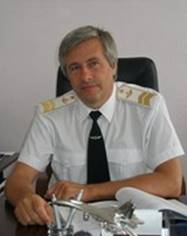
Oleksandr Zaporozhets
Institute of Aviation (Łukasiewicz Research Network – Institute of Aviation), Polandy
Presentation Title: Digital Twin Technologies on Environmental
Impact Management in Airports
Digital Twin Technologies on Environmental Impact Management in Airports
The concept of digital twin for aircraft design and airport management directed to minimize the impact of air traffic on environment was formulated in EU EFACA project. The project considers two conceptual aircraft design configurations for cleaning the European air traffic during next decades. Recently, several different technologies have been put in propulsion designs that have the potential to reduce greenhouse gas emissions and replace the existing conventional, including the jet fuel technology. On one hand, H2 powered aviation just recently regained high attention from the industry, e.g., Airbus launched the ZEROe program where they pledged to develop the world’s first zero-emission commercial aircraft by 2035. On the other hand, sustainable aviation fuels or biofuels have been identified as an alternative option, also possible for supersonic flights. The results of the assessment of environmental factors are considered using a multidimensional approach, ranging from aircraft certification requirements to regional/global assessment of new designs in air traffic. Any factor reduction technology is simulated and compared to reference, usually the best currently in aircraft class, providing the possibility to assess its efficiency for necessary certification requirements and for real or forecasted operational conditions, in particular due to the ACARE goals assessment in mid-2035 and long-2050 terms. Besides the digital twin models for the reference aircraft are helping the better solutions in current air traffic scenarios, especially for noise zoning and operational procedures contribution.
Between the 1978-2022 was employed in National Aviation University, Kyiv, Ukraine on the positions of Researcher, Leading Researcher, Professor, Head of the Chair, Director of the Institute, Vice Rector. From the April 2022 is employed in the Łukasiewicz Research Network – Institute of Aviation in Warsaw, Poland, on a position of the Area Research Leader – Professor. Degree of the Dr.Sc. was obtained in 1998 by the defending the thesis “Development of Models and Methods of Information Provision for Environment Protection from Civil Aviation Impact”. The title of Professor was obtained in 2004 by decision of the Academic Council of the National Aviation University. ICAO CAEP (Committee on Aviation Environmental Protection) member between 2010-2020 by nomination from Ukrainian CAA, currently a member of the MDG, WG2 and ISG groups of the CAEP. ECAC AIRMOD (Aircraft Noise Modelling Task Group) and EAEG (European Aviation and Environment Group) member from 2010. SARES member from 2015, a member of the management board from 2023, an honorary member from 2024.
1 – Digital Twin
2 – Aircraft
3 – Airport, Fleet
4 – Reference Model
5 – Baseline Model
6 – Fuel Burn
7 – Engine emission
8 – Noise.
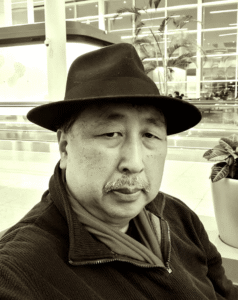
Kwon Alex Hakeem
Korea National Association of Cognitive Science Industry, South Korea
Presentation Title: A.I cooperative Swarm Drone
AI Drone for SWARM Drone
The rapid evolution of Unmanned Aerial Systems demands a transition from teleoperated operations to autonomous multi-agent architectures. This paper explores the integration of Artificial Intelligence into swarm drone systems, focusing on the convergence of Edge AI, physical AI, and distributed multi-agent reinforcement learning. By embedding lightweight neural networks onto onboard computing units, swarms achieve real-time decentralized decision-making, adaptive path planning, and dynamic collision avoidance without continuous centralized control. Furthermore, bio-inspired algorithms enable self-healing communication topologies and cooperative task allocation in GPS-denied environments. Addressing critical bandwidth and computational constraints, this study provides a concise blueprint for deploying scalable, resilient swarm intelligence across next-generation civilian and defense missions.
Dr. Hee-Choon Kwon (Alex / Hakeem Chaudrey) is a globally recognized authority and strategist at the forefront of Artificial Intelligence (AI), Unmanned Aerial Systems (UAS), and “Physical AI.” Serving as the Chairman of the Korea Cognitive Science Industry Association (NACSI) and the Director of the AI Drone Center at Sae-gyeong University, Dr. Kwon is a key architect of the global “Low-Altitude Economy.”
1- Edge AI in UAS
2- Swarm Intelligence
3- Multi-Agent Reinforcement Learning (MARL)
4- Physical AI
5- Decentralized Path Planning
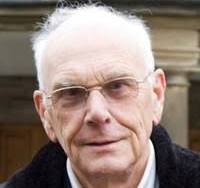
Maximillian Platzer
Affiliation, USA
Presentation Title: Can aerohydronautical engineering make a contribution to the transition to the hydrogen economy?
Can aerohydronautical engineering make a contribution to the transition to the hydrogen economy?
Content
Content
1- Formal methods;
2- Sensor fusion;
3- Real-time perception
4- Autonomous drones;
5- Hybrid systems;
6- Differential dynamic logic; Probabilistic verification; Runtime assurance; Safety-critical UAV systems
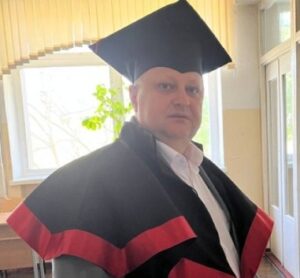
Sergii Boichenko
National Technical University of Ukraine “Igor Sikorsky Kyiv Polytechnic Institute”, Ukraine
Presentation Title: Status and Perspectives of Hydrogen Infrastructure in Ukraine: World Experience
Status and Perspectives of Hydrogen Infrastructure in Ukraine: World Experience
Ukraine is one of the EU’s priority partners in the future hydrogen economy, as it has the necessary capacity for hydrogen production – both for domestic consumption and for export. In 2021, the Ministry of Energy of Ukraine joined the European Pure Hydrogen Alliance. Ukraine’s potential for hydrogen production is currently being investigated. The possibility of using the national GTS for hydrogen transportation to Europe is also being studied. Ukraine has significant potential for hydrogen production, especially green hydrogen from renewable resources, but faces challenges like high costs and insufficient infrastructure. The current focus is on leveraging existing gas transport systems and developing new international pipeline corridors, such as the Central European Hydrogen Corridor (CEHS), to export hydrogen to the EU. International cooperation and a national strategy are key to unlocking this potential. In general, the infrastructure of hydrogen technologies is in its infancy and requires significant investment in development. For example, there are no stationary hydrogen car refueling stations, and due to military aggression, the hydrogen infrastructure of airports is not being developed, but there is a developed network of gas pipelines that can be rationally used for hydrogen transportation
Date of birth – 12 April 1968;
Head of the Scientific and Technical Union of Chemmotologists.
Supervisor of the Interactive Laboratory for Diagnosing Operational Materials in Energy and Transport,
Head of the Department of Automation of Electrical and Mechatronic Complexes,
Institute of energy Saving and Energy Management,
National Technical University of Ukraine “Igor Sikorsky Kyiv Polytechnic Institute”
The main Scientific direction is the Efficient and Rational Use of Fuels, Lubricants & Technical liquids (Сhemmotology).
Started working experience in 1990-1991 at the Civil Aviation Plant. In 1998-2006 I was the head of the Petroleum Products Testing Center of the Ukrainian Center for Aviation Chemmotology and Product Certification «UCACH-SEPRO». In 2005 I was the head the Ukrainian Research and Training Center of Chemmotology and Certification of Fuel and Lubricants and Technical Fluids. In 2007 I founded and became the head of the chemmotology department of the National Aviation University. At the same time he was appointed Deputy Vice-Rector of the University for scientific work. Since 2011, after the reorganization of the Department of chemmotology, I headed the Department of Ecology at the Institute of Environmental Safety of the National Aviation University.
05.2018–02.2019 – Director of the Education-Research Institute of Environmental Safety
(National Aviation University).
02.2019–11.2020 – Dean of the Faculty of Environmental Safety, Engineering and Technology (National Aviation University).
11.2020–30.06.2021 – Supervisor of the Ukrainian Research and Educational Center
of Chemmotology and Certification of Fuels, Lubricants and Technical liquids.
01.09.2021 – till now – National Technical University of Ukraine “Igor Sikorsky Kyiv Polytechnic Institute”, Supervisor of the Interactive Laboratory for Diagnosing Operational Materials
in Energy and Transport.
- Hydrogen
- Infrastructure
- Technologies
- Chemmotology
- Energy
- Potential
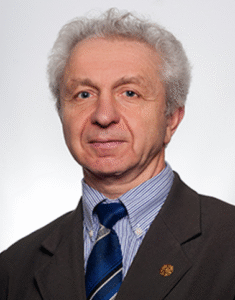
Yepifanov Sergiy
National Aerospace University “Kharkiv Aviation Institute”, Ukraine
Presentation Title: Aircraft Engine Residual Life-time Monitoring
Aircraft Engine Residual Life-time Monitoring
The development of mechanical engineering, particularly in aeronautical engineering, is accompanied by a continuous increase in service life. This process is driven not only by user needs but also by fierce competition among developer companies. Aircraft engines are a prime example of this type of technology. Their service life for military aircraft is several thousand hours, and for civil aviation, tens of thousands of hours. Such service life cannot be ensured without a dedicated flight data monitoring system that calculates actual service life based on actual flight conditions.
Current systems based on flight hours counters do not provide the required accuracy. Therefore, we have developed a system based on a complex of mathematical models of the operating process, thermal and stress states, and a damage model. This system is used by engine developers when assigning service life, but it is unsuitable for operational use for the following main reasons: 1) it is based on finite element models of the main engine components, making it extremely labor-intensive; 2) it considers engine operation under design conditions, while in actual operation, deviations from these conditions can be significant. Therefore, the proposed system utilizes monitoring mathematical models that address these shortcomings.
The report examines the development of monitoring mathematical models for the work process, thermal and stress states, and the analysis of monitoring errors. Examples of practical application and verification of the proposed method are provided.
CURRENT POSITION
Doctor of science, Engineering
Honoured Worker of Science and Technology of Ukraine
Academician of Engineering Academy of Ukraine
Full professor and chief of the Aircraft Engine Design Department
Scientific adviser of the Aero Engine Diagnostics Laboratory
Head of the editorial board of the journal Aerospace Technique and Technology.
Member of the editorial board of the journal Internal Combustion Engines.
Founder and a principal organizer of the annual International Congress of Propulsion Engineering (since 1996).
Head of the Specialized Council for Defending Doct. Sc. Dissertations.
Head of the Section “Aerospace Engineering and Transport” of Expert Council on the Scientific Researches of the Ministry of Science and Education of Ukraine
AREAS OF FUNDAMENTAL RESEARCHES
Gas turbine engines; automatic control; strength life-time analysis; parametric diagnostics; system dynamics; system identification
APPLIED INVESTIGATIONS
In these areas of scientific activity since 1975 S. Yepifanov carries on works with leading engine and aircraft designing companies of Ukraine and former Soviet Union. Under his guiding, the Engine Simulation Tools were designed with which dynamic models of all engines created in JSC “Ivchenko-Progress” and JSC “Motor Sich” design bureaus were realized.
S. Yepifanov was head and direct participant of designing engine diagnostic systems for
An-124, An-140, An-148, Il-96 and Tu-204, and also automatic control systems and life-time monitoring systems for more than 20 types of engines and power plants.
PUBLICATIONS
Scopus – 40, others – 435. Monographs – 7, textbooks – 12, tutorials – 33.
1- aircraft engine
2- service life
3- damage
4- stress state
5- thermal state